Mickey's Jigsaw Puzzles
Developed by:
Novotrade Software Kft.
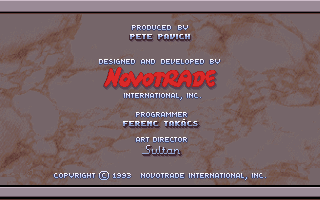
Appaloosa Interactive Corporation was a Hungarian game development studio founded by András Császár and Stephen J. Friedman. It was established in 1983 as Novotrade Software Kft. by 4 banks and 93 enterprises as a way to get hold of foreign currency, of which the supply was always low in the eastern bloc. The company also made computer programs and TV commercials. An office in California (USA) was also opened in 1983, possibly with the name Novotrade International LLC. When Hungary became a republic in October 1989 after shaking off the communist regime, the operations in Hungary and the USA were joined with the establishment of Novotrade International, Inc. In addition the name was changed to Appaloosa Interactive Corporation on 4th November 1996.
In the nineties the company was especially known for creating games for SEGA consoles, most notably in the Ecco the Dolphin series.
The company was closed in 2006.
Multiplayer:
No Multiplayer
Platform:
Rated:
3 x
Current rating:
Your rating:
Not rated -
login
- and rate
Uploaded by:
Anonymous
External links:
Description
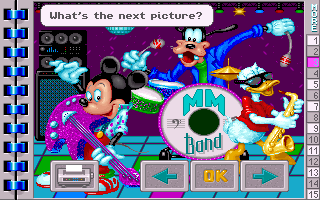
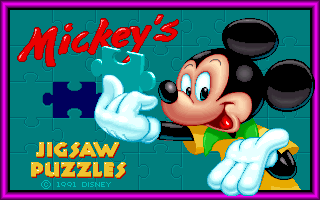
Mickey's Jigsaw Puzzles (1991) is a classic educational title that belongs to a very specific era of PC gaming—the early 1990s "Disney Software"
boom, back when Disney was aggressively licensing its characters for home computers.
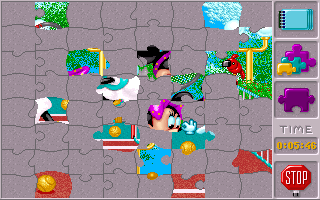
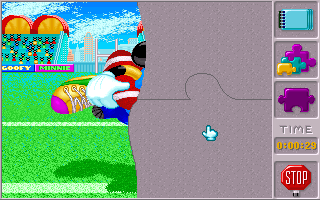
At its core, the game is exactly what it sounds like: a digital jigsaw puzzle game designed primarily for young children. However, it had a few
features that made it stand out from cheap clones:
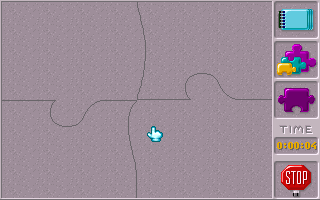
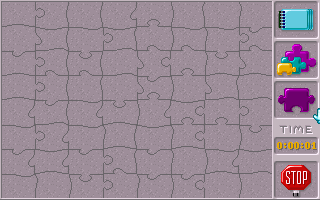
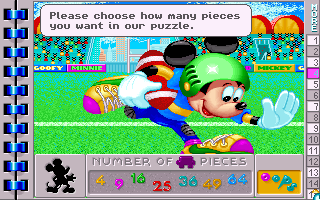
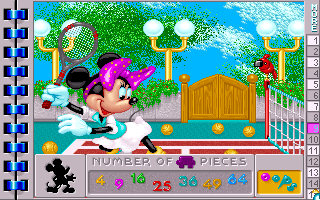
- Customizable Difficulty: Players could choose how many pieces to break the image into (ranging from a very simple 4 pieces for toddlers up to 64
pieces for a decent challenge).
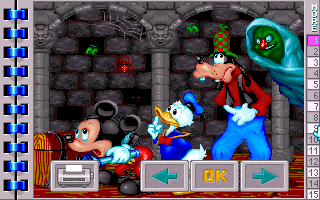
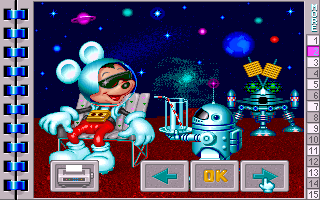
- Animated Payoffs: The absolute best part of the game was the reward for finishing a puzzle. Once you placed the final piece, the static Disney
scene would "come to life" with short, charming 2D loop animations—for example, Mickey waving, Donald Duck getting angry, or Pluto wagging his
tail.
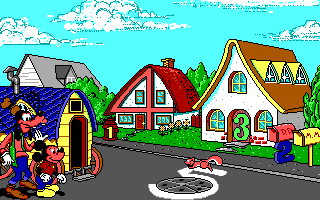
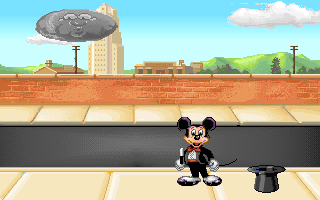
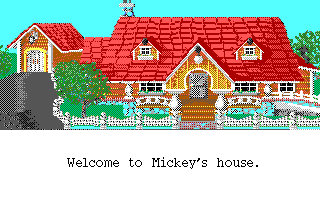
It utilized 256-color VGA graphics. The hand-drawn style perfectly captured the look of classic Disney cartoons, which was incredibly impressive
on home monitors at the time compared to the blocky CGA graphics of the late 80s.
Instead of just relying on the harsh, robotic bleeps of the internal PC speaker, the game supported the AdLib and Sound Blaster cards. This allowed
for actual synthesized music and digitized sound effects that made the Disney magic feel much more authentic.
More games from the same developer
Discover your next favourite game.
Follow Free Game Empire for weekly classics, gameplay tips and community picks.
 Follow on Facebook
Play game Mickey's Jigsaw Puzzles




Comments